Friday, 15 October 2010

How Editing Manipulates Time

In film, manipulating time is a term used whilst editing. It's a great thing to do as it can make events occur quicker than it actually is or do the opposite and slow things right down.

Source: http://www.scribd.com/doc/8332514/Manipulating-Time

Screen time: a period of time represented by events within a film (e.g. a day, a week).

Subjective time. The time experienced or felt by a character in a film, as revealed through camera movement and editing (e.g. when a frightened person's flight from danger is prolonged).

Compressed time. The compression of time between sequences or scenes, and within scenes. This is the most frequent manipulation of time in films: it is achieved with cuts or dissolves. In a dramatic narrative, if climbing a staircase is not a significant part of the plot, a shot of a character starting up the stairs may then cut to him entering a room. The logic of the situation and our past experience of medium tells us that the room is somewhere at the top of the stairs. Long journeys can be compressed into seconds. Time may also be compressed between cutaways in parallel editing. More subtle compression can occur after reaction shots or close-ups have intervened. The use of dissolves was once a cue for the passage of a relatively long period of time.

Long take. A single shot (or take, or run of the camera) which lasts for a relatively lengthy period of time. The long take has an 'authentic' feel since it is not inherently dramatic.

Simultaneous time. Events in different places can be presented as occurring at the same moment, by parallel editing or cross-cutting, by multiple images or split-screen. The conventional clue to indicate that events or shots are taking place at the same time is that there is no progression of shots: shots are either inserted into the main action or alternated with each other until the strands are somehow united.

Slow motion. Action which takes place on the screen at a slower rate than the rate at which the action took place before the camera. This is used: a) to make a fast action visible; b) to make a familiar action strange; c) to emphasise a dramatic moment. It can have a lyric and romantic quality or it can amplify violence.

Reverse motion. Reproducing action backwards, for comic, magical or explanatory effect.

Replay. An action sequence repeated, often in slow motion, commonly featured in the filming of sport to review a significant event.

Freeze-frame. This gives the image the appearance of a still photograph. Clearly not a naturalistic device.

Flashback. A break in the chronology of a narrative in which events from the past are disclosed to the viewer. Formerly indicated conventionally with defocus or ripple dissolves.

Flashforward. Much less common than the flashback. Not normally associated with a particular character. Associated with objective treatments.

Screen time: a period of time represented by events within a film

(e.g. a day, a week).

Subjective time. The time experienced or felt by a character in a

film, as revealed through camera movement and editing (e.g. when

a frightened person's flight from danger is prolonged).

Compressed time. The compression of time between sequences or

scenes, and within scenes. This is the most frequent manipulation of
time in films: it is achieved with cuts or dissolves. In a dramatic
narrative, if climbing a staircase is not a significant part of the plot,
a shot of a character starting up the stairs may then cut to him
entering a room. The logic of the situation and our past experience
of medium tells us that the room is somewhere at the top of the
stairs. Long journeys can be compressed into seconds. Time may
also be compressed between cutaways in parallel editing. More
subtle compression can occur after reaction shots or close-ups have
intervened. The use of dissolves was once a cue for the passage of
a relatively long period of time.

Long take. A single shot (or take, or run of the camera) which lasts

for a relatively lengthy period of time. The long take has an

'authentic' feel since it is not inherently dramatic.

Simultaneous time. Events in different places can be presented as

occurring at the same moment, by parallel editing or cross-cutting,by multiple images or split-screen. The conventional clue to indicatethat events or shots are taking place at the same time is that thereis no progression of shots: shots are either inserted into the mainaction or alternated with each other until the strands are somehowunited.

Slow motion. Action which takes place on the screen at a slower

rate than the rate at which the action took place before the camera.This is used: a) to make a fast action visible; b) to make a familiaraction strange; c) to emphasise a dramatic moment. It can have alyric and romantic quality or it can amplify violence.

Accelerated motion (under-cranking) . This is used: a) to make a slow action visible; b) to make a familiar action funny; c) to increase the thrill of speed

These are all definitions of the ways you can manipulate time. In the final fight from Green Street (2005) there is an example of how they've used editing to manipulate time. They use slow motion during the fight so that the audience can really take in the action and make the whole scene dramatic. Another example is in the clip below which we have looked at from Lock Stock and Two Smoking Barrels.

a slow action visible; b) to make a familiar action funny; c) to
increase the thrill of speed

Transition Types

In film, a transition is the connection between two different shots. There are three main transitions, these include cut, fade and dissolve.

Cut

This is the most common transition. It is an instant change from one shot to the next. The raw footage from your camera contains cuts between shots where you stop and start recording. In film and television production, the vast majority of transitions are cuts.

Fade

Fades the shot to a single colour, usually black or white. The "fade to black" and "fade from black" are ubiquitous in film and television. They usually signal the beginning and end of scenes. Fades can be used between shots to create a sort of crossfade which, for example, fades briefly to white before fading to the next shot.

Dissolve

Dissolves have a more relaxed feel than a cut and are useful if you want a meandering pace, contemplative mood, etc. Where a fade "fades to black" a dissolve kind of blurs into the next image. Scenery sequences work well with dissolves, as do photo montages. Dissolves can also convey a sense of passing time or changing location.

Jump Cut

A jump cut is a transition between two shots which appears to "jump" due to the way the shots are framed in relation to each other. Jump cuts are usually caused by framing which is quite similar. Here is an example of a jump cut being used in the film Breathless (1960)


The Wipe

A wipe is a gradual spatial transition from one image to another. One image is replaced by another with a distinct edge that forms a shape. A simple edge, an expanding circle, or the turning of a page are all examples.

Using transitions to tell a story

The use of transitions are important in telling a story to the audience. If you had a slow, sad scene, you may want to use something like a fade as it slowly changes into the next shot keeping it at a slow and steady pace. However, if you were watching an action scene such as a fight or a car chase, you would use simple cuts to change shots as these are the quickest transitions and it keeps the story quick and fast paced. This may not happen all the time but it does the majority. There are many ways you can use transitions like the ones above to be able to tell any story you like.

180 degree rule

The 180° rule is a basic guideline in film making that states that two characters (or other elements) in the same scene should always have the same left/right relationship to each other. If the camera passes over the imaginary axis connecting the two subjects, it is called crossing the line. The new shot, from the opposite side, is known as a reverse angle.

This rule is vital in keeping connected with the audience because if you break the rule, the audience are going to be confused and will have trouble with keeping up with the story.
Below is a short video clip which helps explain this rule...

Tuesday, 12 October 2010

Editing Styles and Conventions

There's a lot of editing styles and conventions and one which we have looked at is the use of montage. There are 3 references to montage including French montage, which simply means to edit (montage in French means edit). Then there is the Soviet style montage which was a method of juxtaposing shots to derive new meaning that did not exist in either shot alone and finally Hollywood montage which is narrative information being shown in a condensed fashion. This is the most common and modern type of montage. The video below is an example of Lev Kuleshov's theory of editing. He came up with an experiment calle the Kuleshov experiment which he designed to point out the importance of cinema editing and the effects it can have on an audience.


Another editing style, which is the most predominant style of editing in todays film and television, is continuity editing. Here is a caption from http://en.wikipedia.org/wiki/Continuity_editing explaining different types of continuity editing.

Diegetic sound is that which is to have actually occurred within the story during the action being viewed. It is sound that comes from within the narrative world of a film (including off-screen sound). Continuous diegetic sound helps to smooth temporally questionable cuts by overlapping the shots. Here the logic is that if a sonic occurrence within the action of the scene has no breaks in time, then it would be impossible for the scene and its corresponding visuals to be anything but temporally continuous.

Match on action technique can preserve temporal continuity where there is a uniform, unrepeated physical motion or change within a passage. A match on action is when some action occurring before the temporally questionable cut is picked up where the cut left it by the shot immediately following. For example, a shot of someone tossing a ball can be edited to show two different views, while maintaining temporal continuity by being sure that the second shot shows the arm of the subject in the same stage of its motion as it was left when cutting from the first shot.

Temporal discontinuity can be expressed by the deliberate use of ellipses. Cutting techniques useful in showing the nature of the specific ellipses are the dissolve and the fade. Other editing styles can show a reversal of time or even an abandonment of it altogether. These are the flashback and the montage techniques, respectively.


This text from wikipedia explains different parts of continuity editing, Diagetic sound is basically sound that is meant to appear in the video even if it wasn't in the original recording. For example, a car door being shut is meant to be heard but the sound may have been from a different recording. Temporal Discontinuity is when you have someone talking and it cuts to a different location but they continue the next sentence they are saying. This is done on purpose and is a good technique to use if you wanted to travel to a destination quick. Below is an example from Snatch where it shows an example of temporal discontinuity at the beginning.


Another style of editing is cross-cutting which is often used in films. The use of this technique is to show action that is happening in to different locations and it cuts between each scene to build up suspence. Cross-cutting also sets the pace of the film and can be great to lead up to a big finale. Below is an example from D.W. Griffith's A Corner in Wheat (1909) and shows cross-cutting between the poor and wealthy.

Tuesday, 28 September 2010

The History and developments of Post-production


Edwin S. Porter changed the way we all see films today after making The Life of an American Fireman (1903). He paved the way that would lead to todays digital editing.The Life of an American Fireman was a monumentous moment in film, Edwin was the first person to use cross-cutting as he cut between a woman and child in a burning building whilst cutting to the fireman on their way to save them. It was also considered to be one of the first films that included narrative and action. Porter also created dissolves and gradual transitions from one image to another. This technique helped audiences follow complicated outdoor movement.

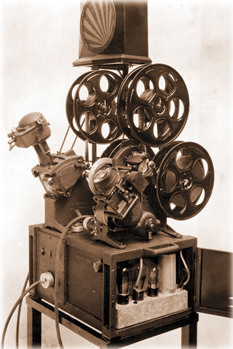
In 1924 Iwan Serrurier invented the moviola which was a machine used for motion picture editing. Iwan's concept for the moviola though was to be sold to the general public as a homemovie projector. Editors could now study individual shots in their cutting rooms and decide much more precisely which was the best point to cut. The machine itself was very expensive costing $600 in 1920 which is equivalent to $20,000 dollars in todays money. There were very few Moviola's sold because of the heavy price tag thatcame with it.

In 1929, Russian director Dziga Vertov made Man with a Movie Camera which was a silent documentary with no story or actors. It was edited by his wife Elizaveta Svilova. This film shows Soviet citizens at work and at play, and interacting with the machinery of modern life.
This film is famous for the range of cinematic techniques Vertov invents, deploys or develops, such as double exposure, fast motion, slow motion, freeze frames, jump cuts, split screens, Dutch angles, extreme close-ups, tracking shots, footage played backwards, stop motion animations and a self-reflexive style.