
Edwin S. Porter changed the way we all see films today after making The Life of an American Fireman (1903). He paved the way that would lead to todays digital editing.The Life of an American Fireman was a monumentous moment in film, Edwin was the first person to use cross-cutting as he cut between a woman and child in a burning building whilst cutting to the fireman on their way to save them. It was also considered to be one of the first films that included narrative and action. Porter also created dissolves and gradual transitions from one image to another. This
 technique helped audiences follow complicated outdoor movement.
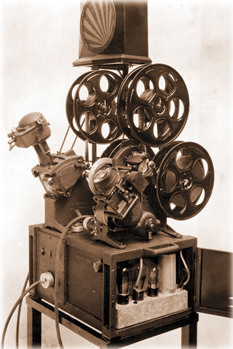
In 1924 Iwan Serrurier invented the moviola which was a machine used for motion picture editing. Iwan's concept for the moviola though was to be sold to the general public as a homemovie projector. Editors could now study individual shots in their cutting rooms and decide much more precisely which was the best point to cut. The machine itself was very expensive costing $600 in 1920 which is equivalent to $20,000 dollars in todays money. There were very few Moviola's sold because of the heavy price tag thatcame with it.
In 1929, Russian director Dziga Vertov made Man with a Movie Camera which was a silent documentary with no story or actors. It was edited by his wife Elizaveta Svilova. This film shows Soviet citizens at work and at play, and interacting with the machinery of modern life.

This film is famous for the range of cinematic techniques Vertov invents, deploys or develops, such as double exposure, fast motion, slow motion, freeze frames, jump cuts, split screens, Dutch angles, extreme close-ups, tracking shots, footage played backwards, stop motion animations and a self-reflexive style.


Craig. Can you add the 1st post about developments in post production and some details on montage? Don't forget to discuss continuity editing and the V for vendetta stuff.
ReplyDelete